The Shoebill at the Edge of the Delta
Below Murchison Falls, where the Nile meets Lake Albert, lives the strangest bird in Africa.
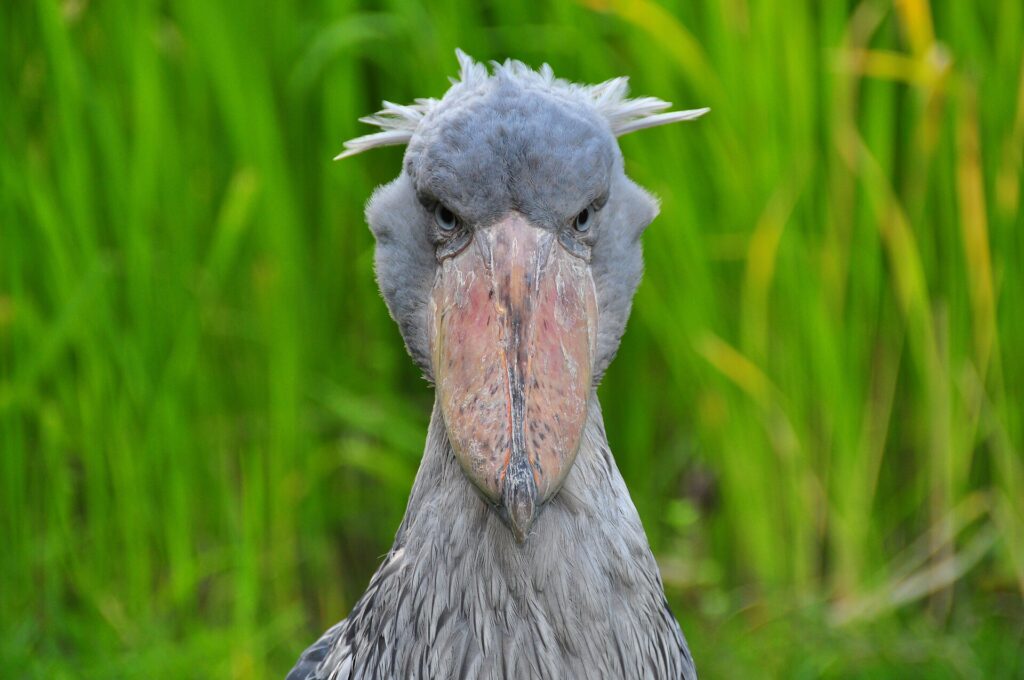
It stands perfectly still in the papyrus, a metre and a half tall, grey as slate, with a bill shaped like a Dutch clog. Then it lunges, collapsing forward onto a lungfish. The shoebill is one of the most sought-after birds in Africa, and the papyrus delta below Murchison Falls is among the best places to see one.
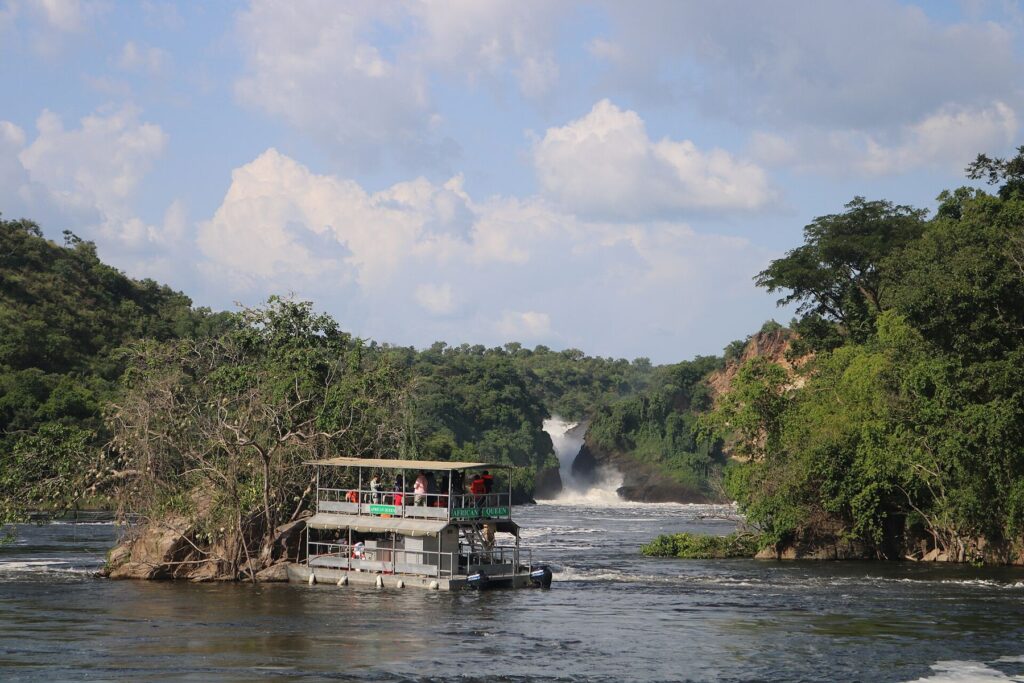
Boat trips leave Paraa in the early morning and take about four hours. Sightings are likely but never guaranteed. Combine the delta with the launch to the falls on our Murchison safari.
A bird like no other
The shoebill, Balaeniceps rex, stands up to about a metre and a half tall, with slate-grey plumage, a small crest and the huge, hooked bill that gives it its name. It hunts by waiting: standing motionless in shallow water or on floating vegetation for long periods, then lunging forward to seize lungfish, catfish and other prey. It is usually solitary and, despite its size, can be surprisingly hard to spot among the papyrus.
Shoebills live only in the swamps of central and eastern tropical Africa, and the species is listed as Vulnerable because those wetlands are shrinking and the birds are easily disturbed. Seeing one in the wild is a highlight for birders and non-birders alike.
The delta trip at Murchison Falls
Below Murchison Falls, the Nile spreads into a delta of papyrus channels where it enters Lake Albert. Boats leave Paraa early in the morning, when birds are most active, and spend about four hours on the river and in the delta. Along the way you pass hippos, crocodiles and herds of elephants and buffaloes at the water's edge, and see a long list of waterbirds: goliath herons, saddle-billed storks, African jacanas and pied kingfishers among them.
Other places to look in Uganda
Close to Entebbe, the Mabamba wetland on the shore of Lake Victoria is reached by small canoe and is often visited on the first or last day of a trip. Shoebills are also found in Semliki Wildlife Reserve and in parts of Lake Mburo and Queen Elizabeth national parks. Local guides know where individual birds have been feeding.
Tips for a sighting
Go early, bring binoculars and keep your voice down when the boat approaches papyrus edges. Be patient: a shoebill that has not moved for twenty minutes may suddenly fly, showing a wingspan of more than two metres. Our Murchison Falls boat trip guide explains how to combine the delta with the launch to the falls, and the three-day Murchison safari includes both.
When to look for shoebills
Shoebills live in the delta all year, but the dry seasons, December to February and June to September, are often best, because lower water concentrates fish along the papyrus edges where the birds hunt. Mornings are better than afternoons: the light is softer, the water is calmer and the birds are more active.
Other birds on the delta trip
Even without a shoebill, the delta is one of Uganda's best birding trips. Look for goliath herons, African fish eagles, saddle-billed storks, pied and malachite kingfishers, and in season the colourful red-throated bee-eaters that nest in the riverbanks. Hippos, crocodiles and elephants along the shore complete the picture.