A Rainbow by Moonlight
On the nights around the full moon, Victoria Falls produces one of nature's rarest light shows.
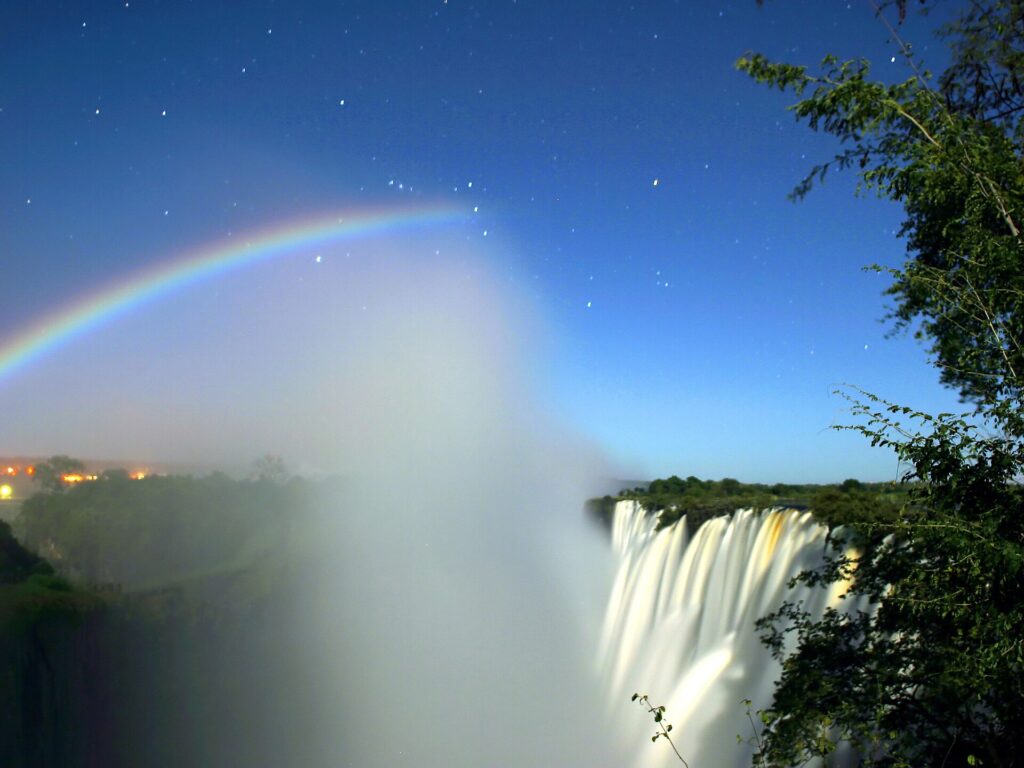
A lunar rainbow, or moonbow, forms on the same principle as a daytime rainbow: light refracted through water droplets. The difference is that moonlight is faint, so the bow appears pale and silvery to the eye; only a long-exposure photograph reveals its colours.
Victoria Falls is one of the few places in the world where moonbows are regular, thanks to the vast column of spray. The rainforest opens for special evening visits on the nights around the full moon, roughly from March to December, with the strongest bows when the water is high.
How to see it
Book a lunar rainbow tour in advance, as numbers are limited. Bring a tripod if you want photographs, and a waterproof jacket. Clear skies are essential; a cloudy night means no bow. Plan your dates with our seasonal calendar.
Why Victoria Falls is the place to see one
Moonbows need a lot of airborne water in front of a bright moon, and Victoria Falls produces more spray than almost anywhere else on Earth. At high water the cloud rises hundreds of metres above the gorge, so on clear nights the conditions are met again and again. A handful of other waterfalls are known for lunar rainbows, but few offer organised night access to a viewpoint facing the spray.
Planning around the moon
The bow forms on the side of the sky opposite the moon, so the timing changes through the night as the moon moves. The full-moon night and the nights immediately before and after it give the strongest light. Look up the full-moon dates for your month of travel before booking flights; if your trip misses the full moon by a few days, the moonbow will be faint or absent.
Water matters as much as the moon. From about March to July the spray is heaviest and the bow is most reliable. In the lowest months, around October and November, there may not be enough spray to form one at all. Our month-by-month guide shows the water levels.
What to expect on the night
Evening tours on the Zimbabwe side enter the rainforest after dark and walk the same path as by day, with the viewpoints lit only by the moon. Your eyes take several minutes to adjust. The bow appears as a pale arc in the spray, sometimes with a fainter second bow above it. People usually stay at the viewpoints for an hour or so before walking back.
Photographing it
Use a tripod and exposures of several seconds at a moderate ISO; the camera will record colours your eyes cannot see. Keep a cloth to wipe spray from the lens between shots, and protect the camera when you are not shooting. A wide lens takes in the bow and the falls together. Read our lunar rainbow tour guide for booking details.