The Smoke That Thunders, Heard From the Inside
In the high-water months, Victoria Falls is less a view than a weather system. What it means to stand inside one.
You hear it first. From the veranda of a hotel in Victoria Falls town, a mile from the gorge, the sound arrives as a low, continuous pressure, like a distant motorway or the sea on a calm night. By the time you reach the rainforest gate it has become something you feel in the sternum. Then you round a bend in the path, the trees thin out, and the air in front of you turns white.
In April, at the height of the Zambezi's flood, more than five hundred million litres of water can pass over Victoria Falls every minute. The river arrives at the lip almost two kilometres wide and drops 108 metres into a slot in the basalt barely wider than a road. There is nowhere for the water to go but up. The spray climbs four hundred metres into the sky, forms its own clouds and falls back as rain, which is why there is a rainforest on the edge of a dry savannah, and why, for much of the year, no one who walks the path stays dry.
A waterfall that makes its own weather
The locals have always understood the falls as a kind of weather. The Kololo name, Mosi-oa-Tunya, "the smoke that thunders", says nothing about height or width; it describes what you see from a distance and what you hear up close. When David Livingstone was paddled to the island that now bears his name in November 1855, at the lowest water of the year, he saw columns of vapour rising from the chasm before he saw the falls themselves.
At high water you do not look at Victoria Falls. You stand inside it, and it decides what you are allowed to see.
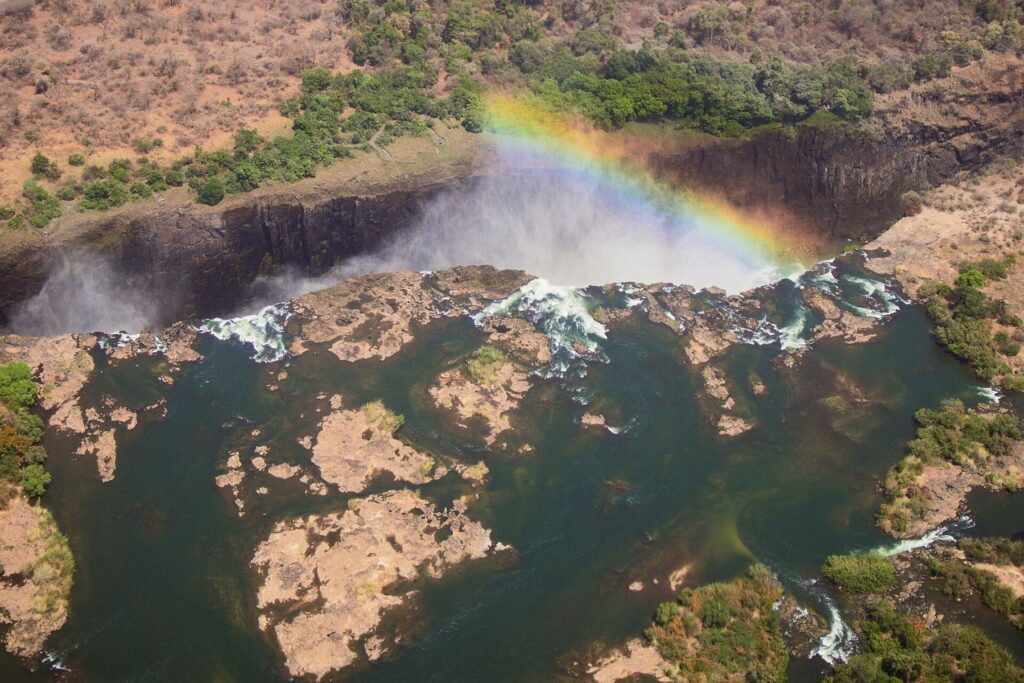
In the dry months, from September, the experience reverses. The curtain on the Zambian side can thin to strands and then to bare, polished rock. The gorge, invisible in April, opens up, and you can see the dark walls dropping into the Boiling Pot. Swimmers sit in Devil's Pool at the very lip, held back by a natural rock wall. Rafters run the rapids of the Batoka Gorge. Neither is the "better" season. They are two different waterfalls.
Walking the sixteen viewpoints
The rainforest path on the Zimbabwe side runs along the opposite lip of the chasm, so that the falls face you across a gap of sixty metres. There are sixteen numbered viewpoints. At the first, beside a bronze statue of Livingstone, you look down into the Devil's Cataract, a narrow chute where the water is green before it turns white. By Main Falls, the spray is so heavy that ponchos are useless; the guides wear swimming costumes. At Danger Point, the final viewpoint, there is no railing, only wet rock and the bridge beyond.
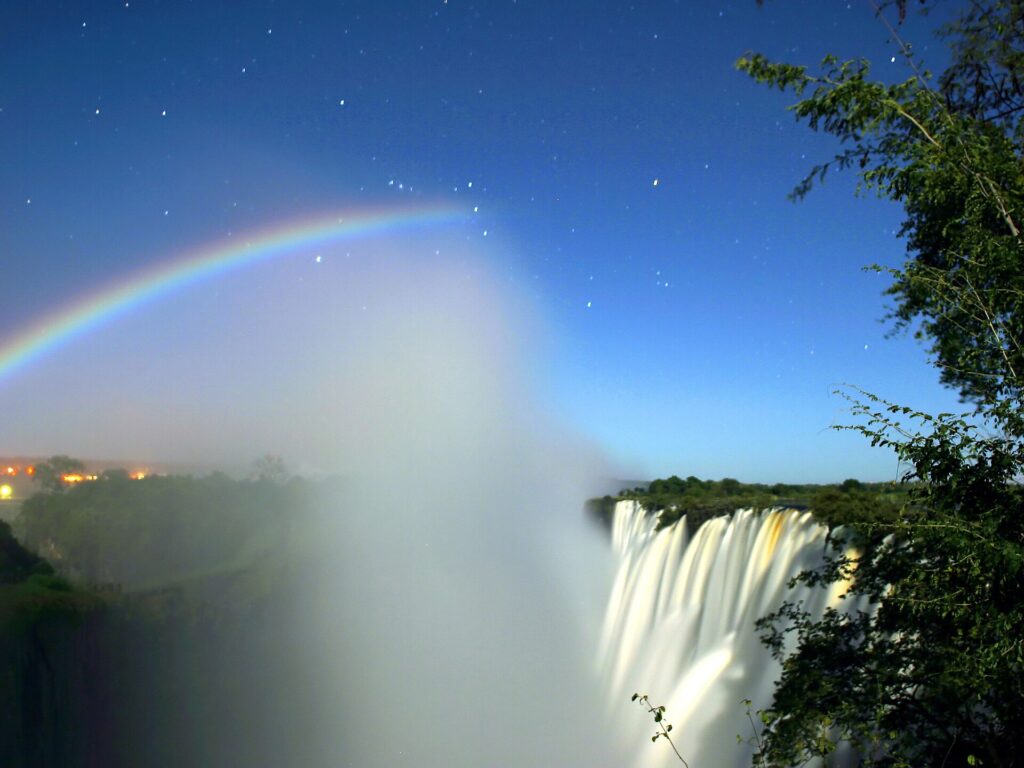
Go at opening time, when the light comes in low from the east and lights up the rainbows that hang permanently in the spray. By late morning the tour groups arrive; by afternoon the sun is behind the falls and the photographs flatten.
The view from above
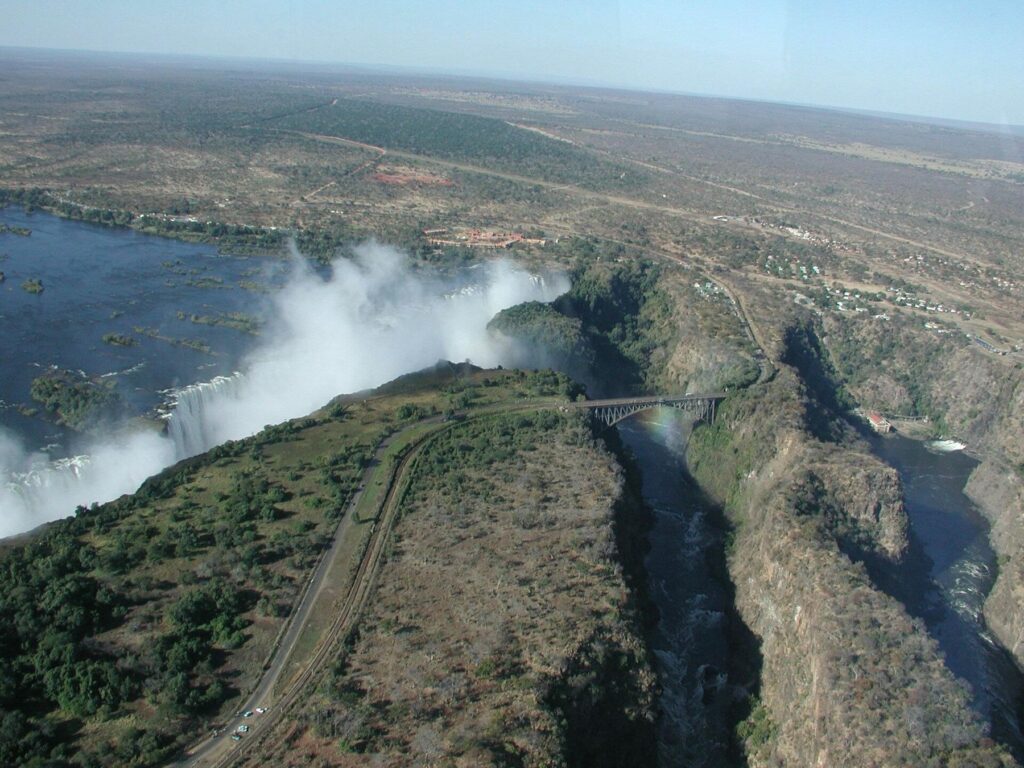
Livingstone wrote that scenes so lovely must have been gazed upon by angels in their flight, and the helicopter operators have taken him at his word. A fifteen-minute "Flight of Angels" is the only way to see the shape of the thing: the river wide and calm and island-studded above the lip, then the abrupt crack in the earth, then the zig-zag of gorges below, each one a former line of the falls, which have retreated upstream over a hundred thousand years.
From the air you also understand the geography of a safari here. Chobe's elephants are an hour away. Hwange is two. The falls are not the destination so much as the junction. Our Victoria Falls and Chobe safari follows exactly that logic, and for a short visit, the three-day break covers both sides.
When to go
If you want spectacle and do not mind getting soaked, choose March to June. If you want photographs, Devil's Pool and rafting, choose September to December, and see the Zimbabwe side, where the flow lasts longest. July and August are a compromise many travellers prefer. Our seasonal calendar shows the water month by month.
Practical notes
Fly into Victoria Falls Airport for the Zimbabwe side or Livingstone for the Zambian side; both are within half an hour of the falls. The KAZA UniVisa covers both countries. Bring quick-dry clothes and a waterproof pouch for your phone in high water, and sandals with grip for the wet paths. Allow at least two nights. See Zambia or Zimbabwe? to plan your days on each side.