Livingstone's Ledger
How a Scottish missionary named a waterfall that already had a name, and what that tells us.
On 16 November 1855, David Livingstone was paddled by Makololo boatmen to an island at the edge of the Zambezi. He was almost certainly the first European to see the falls, and he named them after his queen. But the people who lived there had names already: Mosi-oa-Tunya, and Shungu Namutitima, "boiling water".
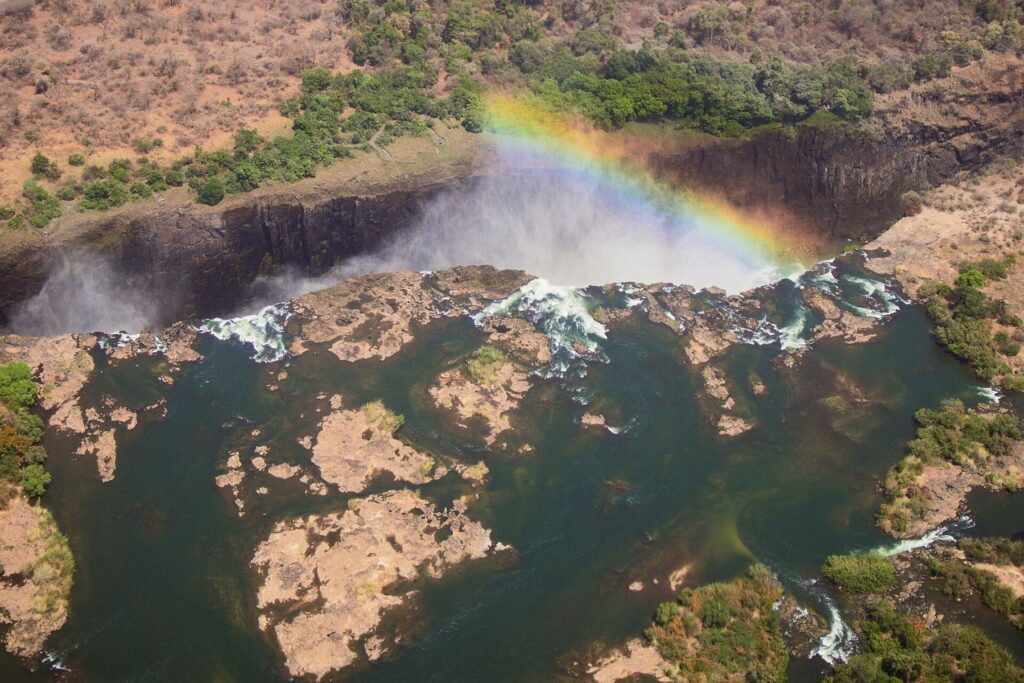
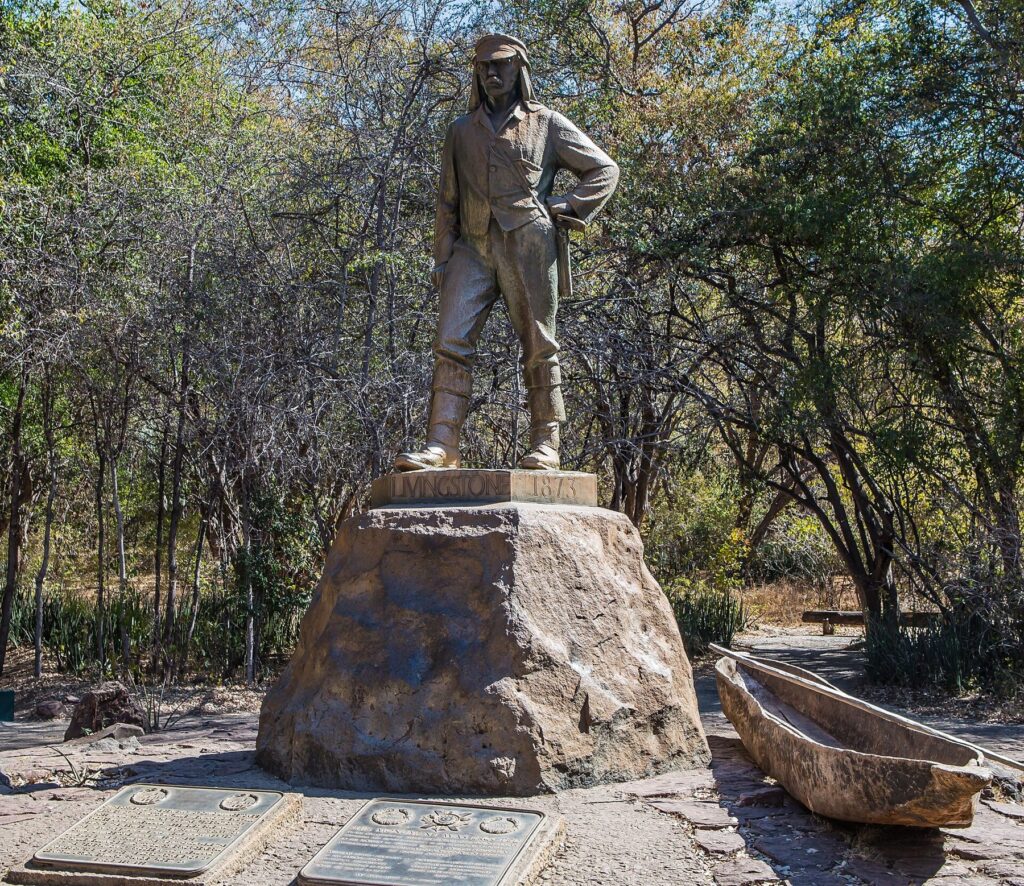
Today, the national park on the Zambian side is called Mosi-oa-Tunya, the island is Livingstone Island and the falls keep both names. A statue of Livingstone stands at the first viewpoint on the Zimbabwe side, facing the Devil's Cataract.
The journey that led there
Livingstone reached the falls during his great crossing of southern Africa between 1853 and 1856, when he travelled from the upper Zambezi to Luanda on the Atlantic coast and then back across the continent to the mouth of the Zambezi on the Indian Ocean. He was looking for a navigable river route into the interior. The Makololo ruler Sekeletu supported the expedition and travelled with him on the river towards the falls.
He had heard about the "smoke that sounds" long before he saw it. When the canoes brought him to the island at the lip of the falls, in the dry season, he was able to look straight down into the chasm. He later wrote the line that every visitor still quotes, that scenes so lovely must have been gazed upon by angels in their flight.
Many names
The falls already had names in the languages of the peoples around them. Mosi-oa-Tunya, "the smoke that thunders", comes from the Kololo spoken by Sekeletu's people. The Tonga name Shungu Namutitima is usually translated as "boiling water". Livingstone's choice, Victoria, has endured in maps and tourism, but the older names have returned: Zambia's national park at the falls is Mosi-oa-Tunya, and the World Heritage Site carries both names.
After Livingstone
The falls drew traders, missionaries and then the railway. The Victoria Falls Bridge, opened in 1905, carried the line north across the second gorge, close enough to the falls for spray to reach the trains. The same railway brought the first tourists, and the Victoria Falls Hotel was built to house them. The Zambian town that grew nearby took Livingstone's own name.
Standing where he stood
Today you can visit Livingstone Island on a guided tour from the Zambian side and, from mid-August to the end of the year, swim at Devil's Pool beside it. On the Zimbabwe side, his statue stands at the first viewpoint of the rainforest path. Read The Smoke That Thunders for the falls today, and our Victoria Falls guide to plan a visit.
Visiting the Livingstone sites today
In Livingstone town, the Livingstone Museum holds letters, maps and personal objects linked to the explorer, as well as displays on the history and peoples of the region. On the Zimbabwe side, a statue of Livingstone stands at the western end of the rainforest path, near the Devil's Cataract. Guided tours to Livingstone Island, on the Zambian side, take you to the spot where he first looked over the falls.